
Video instruction
Text instruction

Collect Stool Sample
Place the paper on the toilet seat and fold the seat ring over it so that it stays in place. Place the paper a little further back on the toilet seat.
Note: IMPORTANT: THE STOOL SAMPLE SHOULD NOT COME INTO CONTACT WITH THE TOILET BOWL OR WATER.
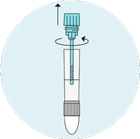
Open Tube
Unscrew the cap of the specimen collection tube.
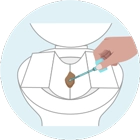
Collect Sample From The Paper
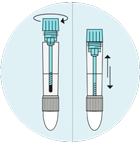
Tighten Cap And Shake
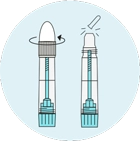
Flip Tube And Open It
Hold the specimen collection tube upright and open the cap onto the specimen collection tube.
Break off the tip.
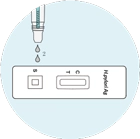
Add Sample To Cassette
Transfer two (2) whole drops of the extracted sample to the test cassette
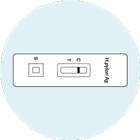
Read Results
Read results at 10 minutes.
After 20 minutes, results are invalid.
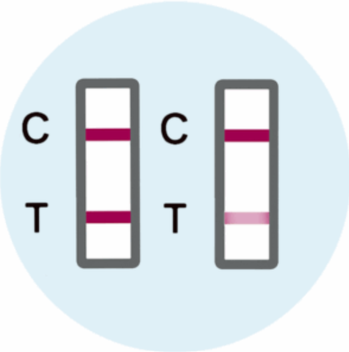
Positive Results
Two lines are visible. Both T (Test) and C (Control) are visible.
This result means that H. pylori antigens are present in the stool.
Note: The intensity of the color in the test line area (T) may vary depending on the concentration of H. pylori antigen in the sample. Therefore, any shade of color in the test line area (T) should be considered positive.
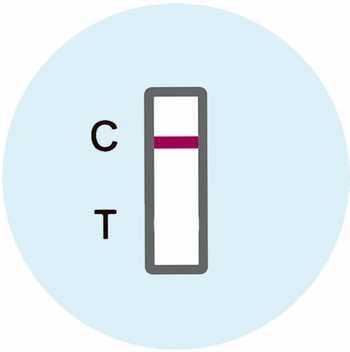
Negative Results
One line is visible. Only the control line (C) is visible.
This result means that the presence of H. pylori in the stool could not be detected.
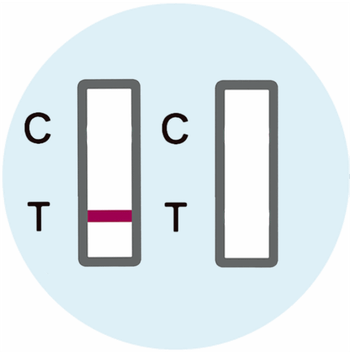
Invalid Results
The control line is not visible.
Insufficient sample volume or incorrect testing procedure are the most likely causes.
This may be the result of an incorrect test procedure and the test should be repeated.